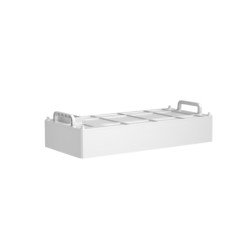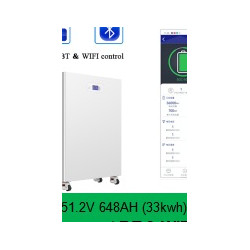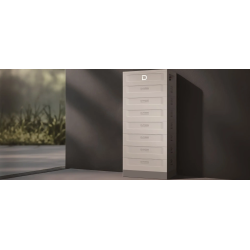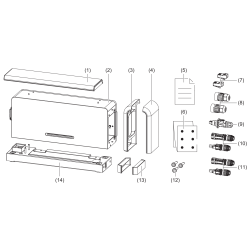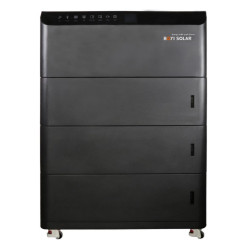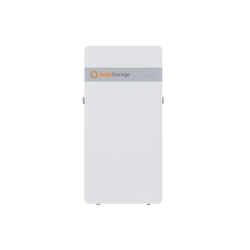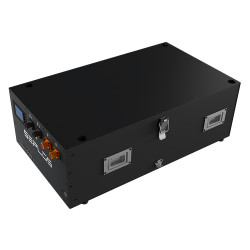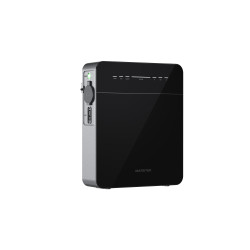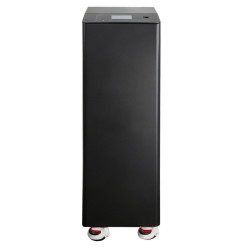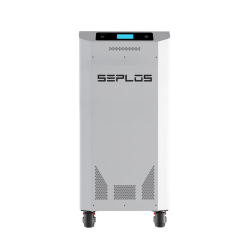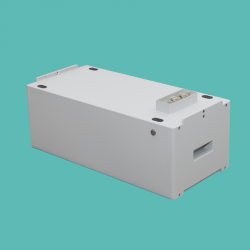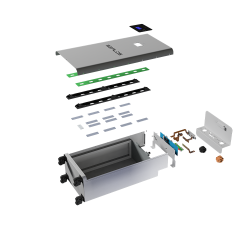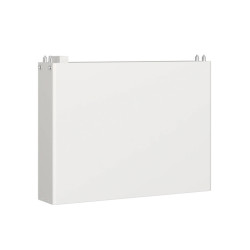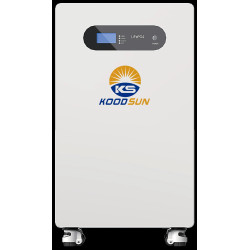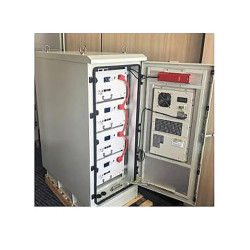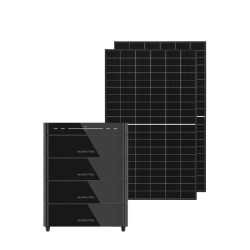
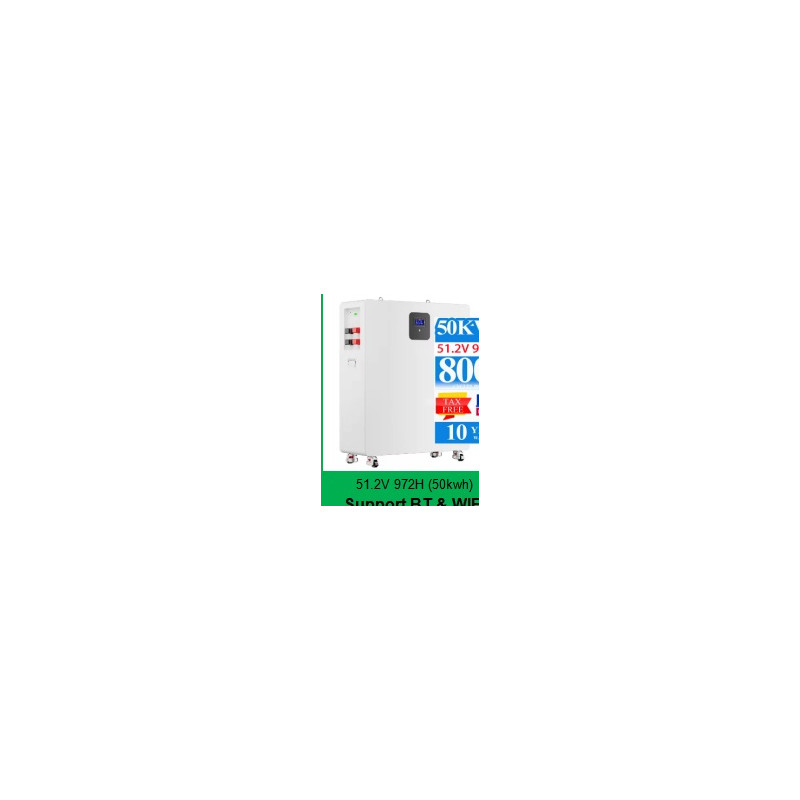

The AVEPOWER 51.2 V 972 Ah floor-standing battery offers 49.7664 kWh nominal energy for solar self-consumption and appropriately designed backup installations. Its vertical format brings the battery section into a dedicated cabinet in the equipment area. The offered variant includes Bluetooth and Wi-Fi support for monitoring. Its 972 Ah capacity provides a clear basis for sizing an energy reserve around your daily consumption.
At 51.2 V, the 972 Ah storage version has 49.7664 kWh calculated nominal energy and belongs to the approximately 50 kWh class. It has three times the capacity of 324 Ah and 50% more than 648 Ah at the same voltage. This size is relevant to an energy-intensive building or a business project requiring a larger reserve. Assess daily generation, intended reserve, handling arrangements and the specifications of the exact 972 Ah version during the design.
A calculation from 49.7664 kWh nominal energy gives the theoretical starting figures: 500 W → 99.53 h; 1,000 W → 49.77 h; 2,000 W → 24.88 h. Energy is divided by average demand without conversion losses, self-consumption or reserve. Use a shorter planned duration based on usable energy and efficiency in the actual installation. These examples compare reserve sizes and are not measured product runtimes. Output-power and current limits must also be respected.
| Parameter | Value |
|---|---|
| Capacity | 972 Ah |
| Nominal voltage | 51.2 V |
| Calculated nominal energy | 49.7664 kWh |
| Chemistry | LiFePO4 |
| Sale unit | one battery / station |
This vertical LiFePO4 battery provides an energy reserve for a properly designed photovoltaic installation. It can receive energy during solar production and supply suitable household or business circuits through a matching inverter later in the day. Size the system from actual generation and consumption profiles: the array determines energy input, the battery determines the reserve and the inverter determines output capability. A floor-standing cabinet gathers the battery section into one organized location in the equipment area.
The 51.2 V rating describes nominal voltage class. Amp-hours express charge capacity, while kWh let you compare the energy reserve with daily consumption. Voltage multiplied by capacity gives nominal calculated energy; usable energy is assessed from the operating window, configured reserve and installation losses. Select this battery together with inverter and control settings. Storage capacity and appliance power are separate design considerations that need to work together in the final installation.
The supplier offer lists Bluetooth and Wi-Fi for this vertical battery range. These connections support convenient access to the operating information available on the selected model. Prepare a suitable local device, and a wireless network in the equipment area for the supported network connection. At commissioning, configure access and check the displayed data. Battery monitoring complements the inverter energy overview and helps you follow how the reserve is used through the day.
Check the inverter battery-input range, permitted currents, battery management and supported communication mode. The exact device and its settings matter alongside the brand and connector type. Set charging limits for the complete battery system and its protection. For backup operation, design the switching arrangement and relevant electrical circuits together. This gives the project a coordinated relationship between capacity, power and control based on the requirements of the building.
Consider floor load capacity, access dimensions, handling route and the service clearances required by the selected model. Terminals, protection and isolation need to remain accessible. Operating temperature and environmental conditions follow the documentation of the exact variant. Plan the cable route to the inverter from allowable current, length and installation conditions. Preparing the area in advance supports delivery, installation and routine inspection of the battery section.
Decide which share of capacity serves normal consumption and which share remains as an operating reserve. A house with evening demand needs a different operating profile from a business consuming energy during working hours. Where system controls and the tariff support scheduling, charging time can also be considered within the permitted operating conditions. Prepare several representative daily profiles rather than one peak figure. This gives a clearer basis for selecting an appropriate storage capacity.
Record required daily energy, typical and maximum loads, and the available installation space. For a fixed battery, add the exact inverter model; for cells, add the pack diagram and BMS; for a mobile source, list the equipment to be powered. This makes selection of capacity, format, cabling and protection more practical. Choose the exact item and quantity. Availability and dispatch timing are confirmed for the specific order. Tomorrow Systems® s.r.o. is the seller.
At delivery and assembly, compare the exact variant with the project and its instructions. Check physical condition, terminals, polarity and charging settings. Use initial operation to assess actual demand, charging and the configured reserve. A fixed electrical installation should be commissioned by a qualified professional. Periodic checks of connections, operating environment and access to protection devices keep the installation organized throughout its use.
At Wodasign™, compare voltage class, capacity and physical format to choose the item for your battery or portable-energy project.
Estimated delivery from China: 29–59 days.
The AVEPOWER 51.2 V 972 Ah floor-standing battery offers 49.7664 kWh nominal energy for solar self-consumption and appropriately designed backup installations. Its vertical format brings the battery section into a dedicated cabinet in the equipment area.
Estimated delivery from China: 29–59 days.