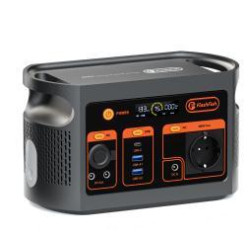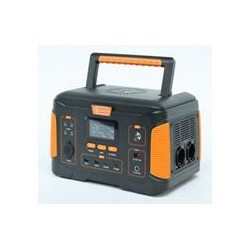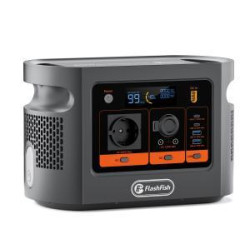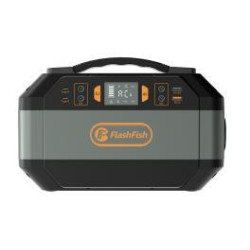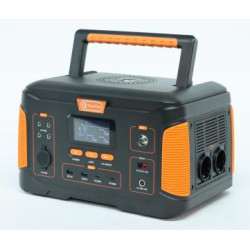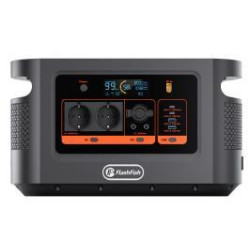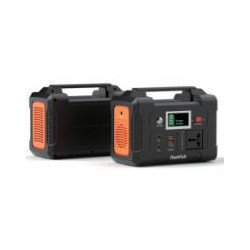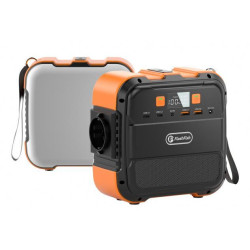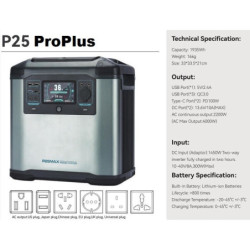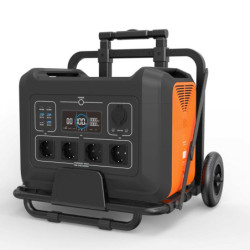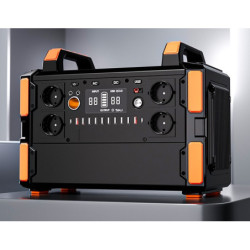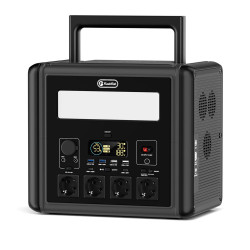
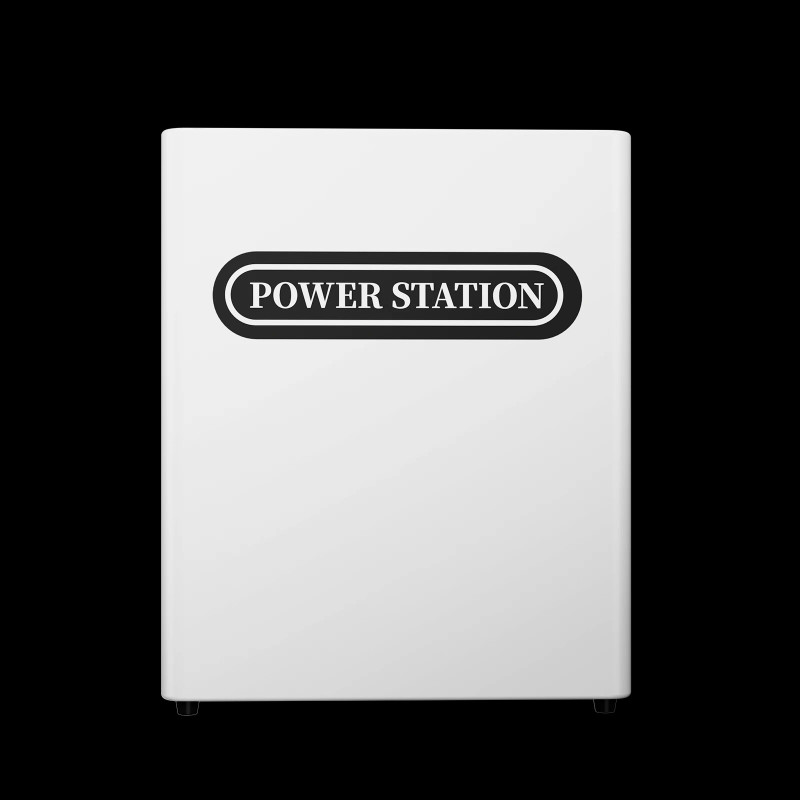


The AVEPOWER 1000 Wh portable power station brings stored energy and power outputs together in one movable unit. It supports mobile power planning for travel, garden use, work away from an ordinary socket and a prepared reserve for appropriately rated household devices. Its 1000 Wh energy rating makes it easier to compare capacity with the loads you intend to run. The main advantage is taking a power source to the place where it is needed.
The 1000 Wh reserve provides a basis for powering electronics during a working day or trip. Calculate energy and combined power for the laptop, lighting and communications equipment; observe the 300 W class of the corresponding AC variant. Backup use is assessed from the actual device requirements and its behaviour during transfer. The manufacturer lists UPS switching within 20 ms, so suitability for sensitive equipment depends on its transfer tolerance.
A calculation from 1 kWh nominal energy gives the theoretical starting figures: 50 W → 20 h; 100 W → 10 h; 300 W → 3.33 h. Energy is divided by average demand without conversion losses, self-consumption or reserve. Use a shorter planned duration based on usable energy and efficiency in the actual installation. These examples compare reserve sizes and are not measured product runtimes. Output-power and current limits must also be respected.
| Parameter | Value |
|---|---|
| Capacity | 1000 Wh |
| Calculated nominal energy | 1 kWh |
| Chemistry | LiFePO4 |
| Sale unit | one battery / station |
The AVEPOWER 1000 Wh power station combines battery storage and power outputs in one movable device. It suits laptops, lighting, communications equipment and other appliances selected to match its output ratings. At a garden site, on a trip or when working away from a regular socket, it offers an organized energy reserve. Before use, compare the combined demand of the connected devices, their required voltages and the intended operating period. These checks help select a practical group of loads for the station.
The manufacturer lists a rated output of 300 W for the corresponding 1000 Wh variant. Capacity of 1000 Wh, or 1 kWh, describes nominal stored energy; 300 W describes the output-power class. Consider both when choosing devices. A laptop averaging 60 W uses 300 Wh over five hours, while several devices running together must also remain within the permitted combined output rating. Energy capacity helps plan duration, and output power helps decide which equipment to connect at the same time.
The manufacturer lists AC, DC, USB-A, USB-C and 12 V DC outputs. The corresponding AC variant is specified at 230 V. Choose a connection from the device requirements and the rating of the individual port; USB-C equipment needs a suitable cable and supported power mode. Direct DC supply can simplify the arrangement for equipment with matching voltage requirements. When using several outputs simultaneously, assess the combined demand under the instructions for the exact station.
The model information lists both AC and solar charging. Its photovoltaic input is specified at 11–55 V with a maximum current of 10 A. The selected panel or panel configuration needs to stay within that range, including its maximum open-circuit voltage. Mains charging is useful before departure; solar charging can replenish energy at the destination. Plan charging duration from actual input power, weather conditions and the remaining battery charge, rather than assuming a fixed charging time in every setting.
Calculate each load by multiplying its average demand in watts by the hours of use. A 10 W light for eight hours requires 80 Wh; a 60 W laptop for four hours requires 240 Wh. Include a reserve for conversion losses and the station electronics. These examples help separate essential and optional loads and schedule the next charging opportunity. For equipment with starting demand, assess its short-term power requirement separately from its normal running load.
For the corresponding enclosure, the manufacturer gives dimensions of 325 × 270 × 172 mm. Secure the device during transport, protect its connectors and choose an operating position that follows its environment instructions. Before a trip, check charge level and prepare the cables needed by all intended devices. For extended storage, follow the recommended state of charge and inspection procedure. A prepared set of connections and a suitable charging routine keep the mobile energy source ready for use.
Record required daily energy, typical and maximum loads, and the available installation space. For a fixed battery, add the exact inverter model; for cells, add the pack diagram and BMS; for a mobile source, list the equipment to be powered. This makes selection of capacity, format, cabling and protection more practical. Choose the exact item and quantity. Availability and dispatch timing are confirmed for the specific order. Tomorrow Systems® s.r.o. is the seller.
At delivery and assembly, compare the exact variant with the project and its instructions. Check physical condition, terminals, polarity and charging settings. Use initial operation to assess actual demand, charging and the configured reserve. A fixed electrical installation should be commissioned by a qualified professional. Periodic checks of connections, operating environment and access to protection devices keep the installation organized throughout its use.
At Wodasign™, compare voltage class, capacity and physical format to choose the item for your battery or portable-energy project.
Estimated delivery from China: 29–59 days.
The AVEPOWER 1000 Wh portable power station brings stored energy and power outputs together in one movable unit. It supports mobile power planning for travel, garden use, work away from an ordinary socket and a prepared reserve for appropriately rated household devices.
Estimated delivery from China: 29–59 days.