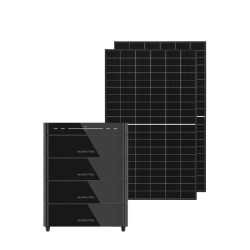
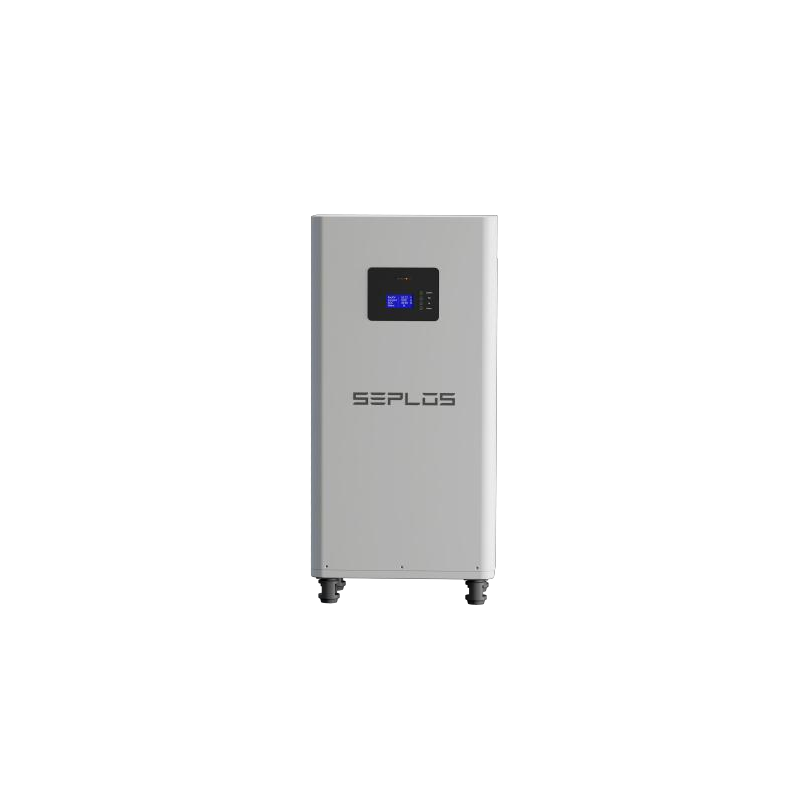


14.336 kWh LiFePO4 storage · 51.2 V low-voltage platform · upright indoor cabinet
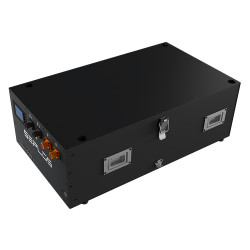
SEPLOS MASON 280L is a complete low-voltage battery pack built from sixteen 3.2 V / 280 Ah lithium iron phosphate cells in a 1P16S arrangement. Its 14.336 kWh nominal energy is intended to store photovoltaic surplus for later use, raise on-site self-consumption and support a correctly designed backup or off-grid installation.
This page describes the exact 280 Ah MASON 280L (3.0Y) revision. It must not be confused with the newer 314 Ah / 16 kWh MASON-280L-N sold from European stock, nor with the separate high-current 10 A active-balancer option. WodaSign™ confirms the production revision, inverter protocol, connection accessories and delivery route before fulfilment.
14.336 kWh of nominal storage can shift a meaningful part of daytime PV production into evening and overnight consumption. The usable energy is lower than the nominal figure because reserve settings, conversion losses, temperature and system limits all matter.
The low-voltage class is used by many hybrid and off-grid inverter families. Compatibility is still verified for the exact inverter model and firmware; matching voltage alone does not prove that CAN or RS485 communication will work.
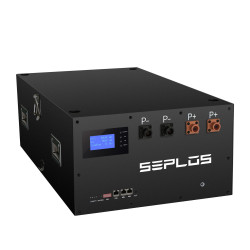
SEPLOS Smart BMS monitors sixteen cell voltages, pack current, four cell-temperature points, ambient temperature and MOSFET temperature. It provides configurable voltage, current and temperature protection plus short-circuit protection.
The manufacturer specification includes a 2 A active-balancing board that can transfer energy to as many as three low-voltage cells at once. This is the standard 3.0Y arrangement, not the separately marketed 10 A board.
The manufacturer permits up to sixteen matching packs in parallel. Expansion requires identical models, compatible firmware, suitable protection, equal cable paths and the prescribed state-of-charge preparation before connection.
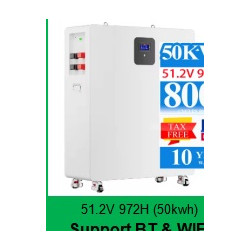
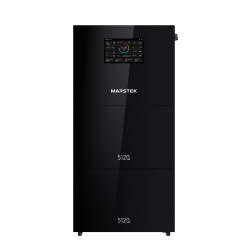
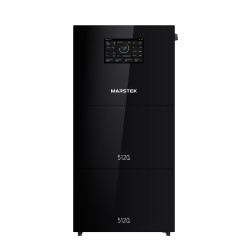
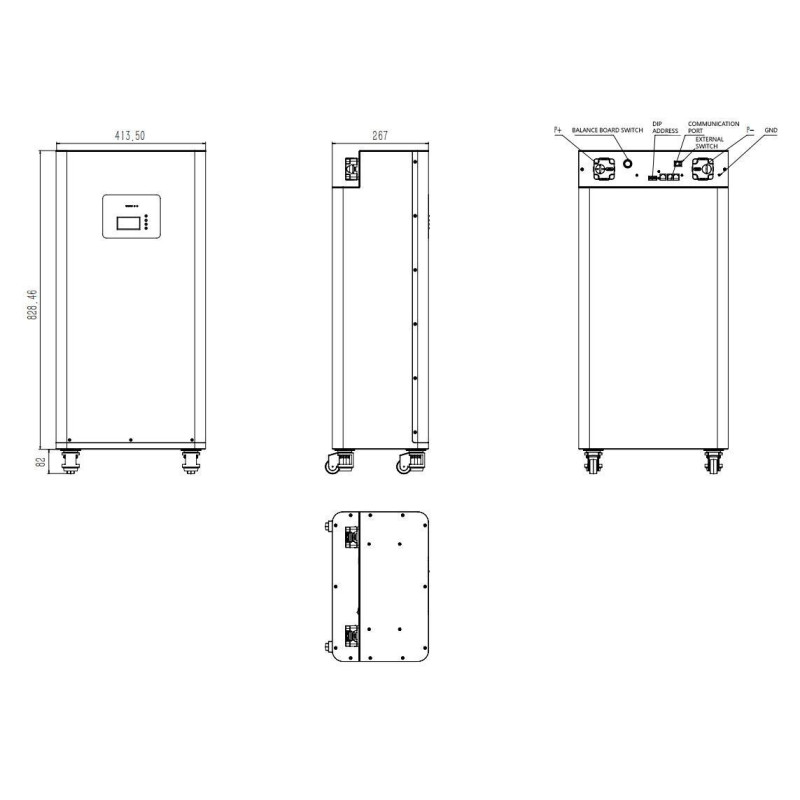
The narrow wheeled cabinet provides a small footprint and top access to the power and communication area. At 113 kg ±3 kg, the unit still requires planned handling and must not be treated as portable equipment after electrical connection.
The values below come from the English manufacturer specification for MASON 280L (3.0Y). Maximum current is a component limit, not a recommendation to operate continuously at that value; the installer must also respect the inverter, cabling, protection and thermal design.
| Product model | SEPLOS MASON 280L (3.0Y) |
|---|---|
| Cell chemistry and arrangement | LiFePO4, 1P16S, sixteen 3.2 V cells |
| Nominal energy | 14.336 kWh |
| Nominal voltage / capacity | 51.2 V / 280 Ah |
| Working-voltage range | 42-58.4 V |
| Rated charge/discharge current | 100 A at 25 ±2 °C |
| Maximum charge current | 200 A at 25 ±2 °C |
| Maximum discharge current | 200 A at 25 ±2 °C |
| Charge temperature | 0 to 40 °C |
| Discharge temperature | -20 to 40 °C |
| Humidity / altitude | 5-80% RH / 0-3,000 m |
| Dimensions | 817 × 412 × 267 mm |
| Weight | 113 kg ±3 kg |
| Ingress protection | IP20 |
| Communication | CAN and RS485 |
| Parallel operation | Up to 16 identical compatible packs |
| Cycle reference | 6,000 cycles at 25 °C, 100 A charge/discharge and 80% depth of discharge |
The BMS is the operating and protection layer of the pack. It measures individual cell voltages, pack current and temperatures; estimates remaining capacity; records operating cycles and can retain up to 500 historical fault records. Protective functions cover cell and pack overvoltage or undervoltage, excessive charge or discharge current, high and low temperature, MOSFET temperature and output short circuit.
The integrated active-balancing board starts only when its configured cell-voltage and voltage-difference conditions are met. The specification states a 2 A balancing current and simultaneous balancing of up to three cells. Balancing supports cell consistency, but it cannot repair a damaged or badly mismatched cell group and does not replace correct commissioning.
CAN operates as the principal upper communication interface, while RS485 is also used for battery monitoring and parallel-pack communication. The selected BMS protocol, connector pinout and inverter firmware must match. A normal RJ45 cable is not automatically the correct communication lead.
A battery does not create backup power by itself. Backup operation requires a compatible hybrid or battery inverter, correct transfer and protective devices, and a distribution board that separates the intended backed-up circuits. Available output power is limited by the configured battery current, inverter rating, temperature and state of charge.
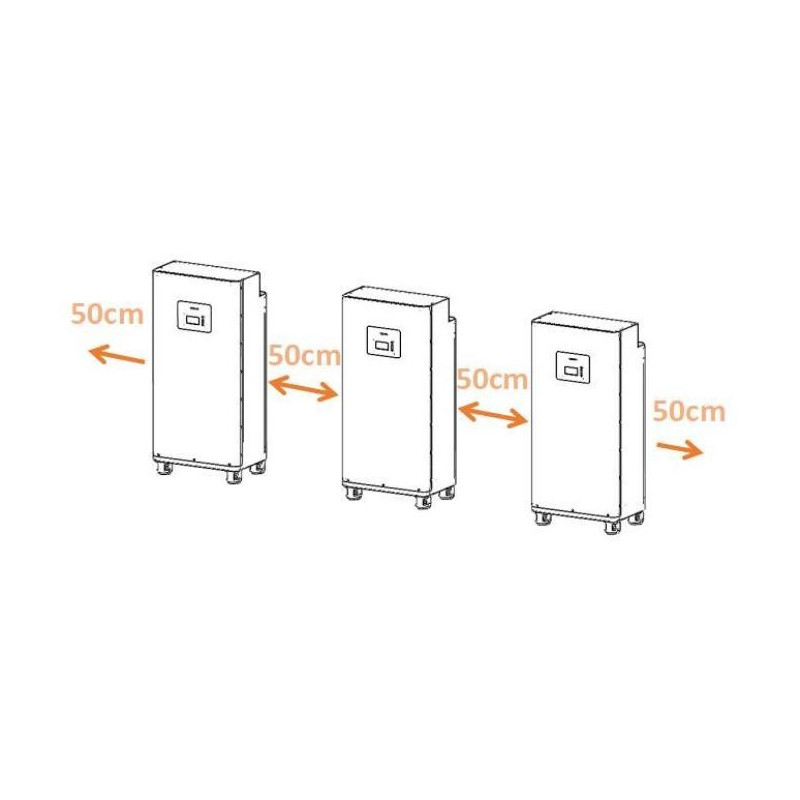
IP20 means this is an indoor battery. Install it in a dry, ventilated technical space on concrete or another stable non-combustible surface, away from flammable materials and liquid exposure. The manufacturer illustration shows 50 cm lateral spacing for heat dissipation. The exact installation plan must also provide safe access to the upper terminals, disconnects and communication ports.
Plan the transport route, floor loading and lifting method before delivery. Switch the battery off before connecting power or communication harnesses. DC conductors, fuses or breakers, disconnects, earthing and inverter settings must be designed and commissioned by a qualified electrical professional.
Capacity and power are different decisions. Kilowatt-hours describe stored energy; kilowatts describe how quickly the inverter and battery can supply a load. A useful proposal starts with measured consumption, PV production, desired reserve, essential backup loads, inverter model and future additions such as a heat pump or EV charger.
For parallel expansion, use only the same approved model and revision. Packs must be brought to the prescribed state of charge before interconnection, and cable lengths and protection must be symmetrical. Never mix different battery brands or capacities on an unmanaged common DC bus.
This exact 280 Ah / 14.336 kWh revision is supplied on confirmed supplier order; it is not presented as current European warehouse stock. Before fulfilment, WodaSign™ confirms the available production revision, delivery date, cell configuration, BMS firmware, inverter protocol, power cables, communication lead and the contents of the shipment. If a current 314 Ah / 16 kWh alternative is more suitable, it is quoted as a different product rather than silently substituted.
Commercial warranty and compliance documents are matched to the supplied production batch. The current certificates for the newer 314 Ah revision are not used to make unsupported claims about this 280 Ah product.

Use more of your own solar energy and build a dependable reserve for evening consumption and a properly designed backup system.
Key features: 14.3 kWh · LiFePO4 technology. SEPLOS MASON 280L 14.3 kWh - 51.2 V LiFePO4 solar battery. A strong choice for new installations and carefully planned expansion. We can verify voltage, communication protocol and the exact inverter model before ordering.