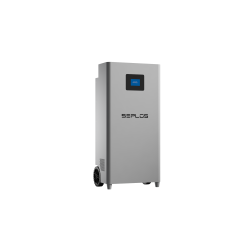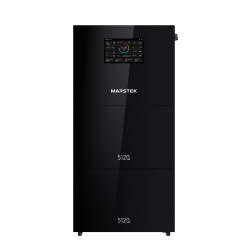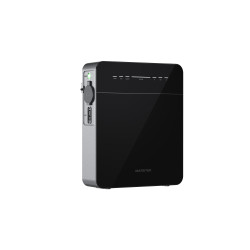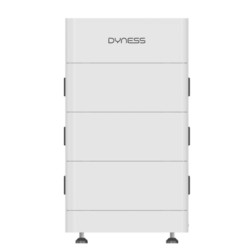
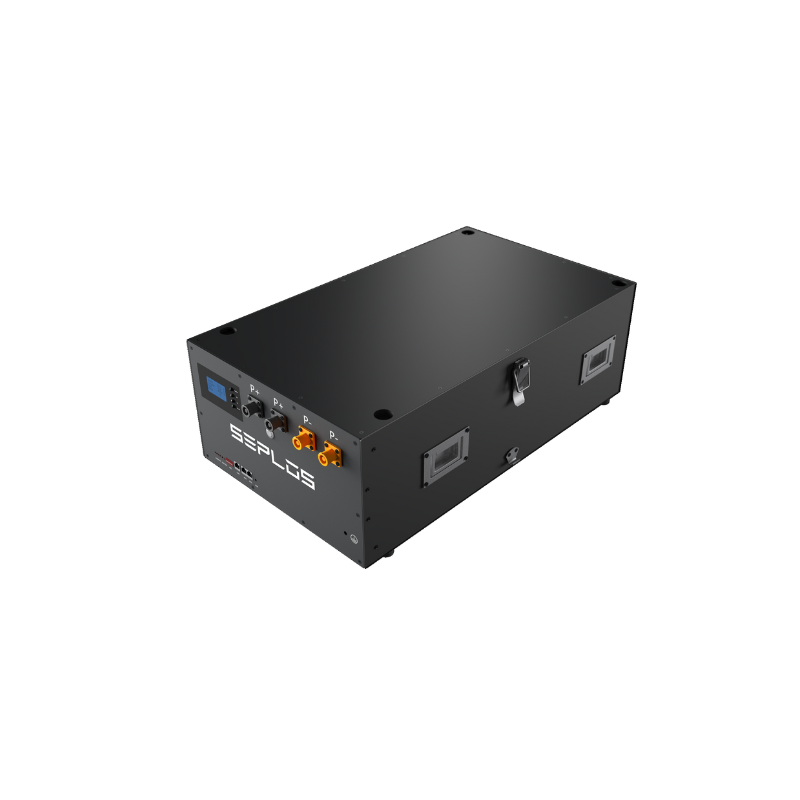


14.3 kWh LiFePO4 solar battery · 51.2 V · 280 Ah
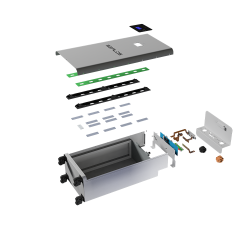
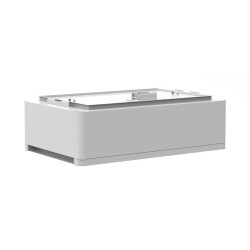
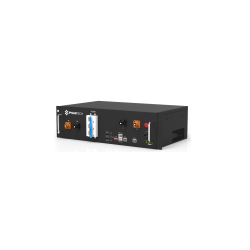
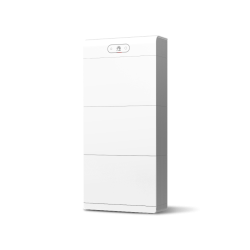
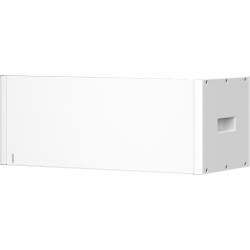
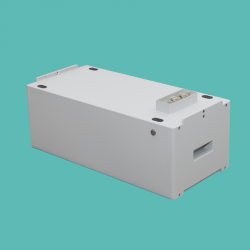
SEPLOS MASON-280 Standard is a complete 51.2 V LiFePO4 battery pack with 280 Ah nominal capacity and 14.336 kWh nominal energy. Its horizontal enclosure can be placed as a single module, installed in a suitable rack arrangement or stacked in a manufacturer-approved group, making it a practical alternative to a tall floor-standing battery.
This page describes the original 280 Ah standard revision. It is distinct from the separately marketed 10 A active-balancer version and from the newer 314 Ah / approximately 16 kWh MASON-280-N. WodaSign™ confirms the cell batch, BMS firmware, balancing board, inverter protocol and supplied accessories before accepting the final configuration.
Solar self-consumption
A battery stores part of the photovoltaic surplus produced while consumption is low and makes that energy available later. This can increase on-site use of solar generation, reduce evening grid imports and support selected backup circuits when the complete system includes a compatible hybrid or battery inverter and an approved changeover arrangement. The battery itself is a DC energy store; it does not replace the inverter, protective devices or professional system design.
Nominal energy and usable energy are not identical. The manufacturer permits a 5–100% state-of-charge range and recommends 15–95% for normal operation. Actual usable energy also depends on inverter settings, temperature, current, reserve for backup and system losses. WodaSign™ therefore sizes the battery from the customer’s load profile, PV production, inverter power and required reserve rather than from annual consumption alone.
A single 280 Ah pack provides 14.336 kWh nominal energy without the extra inter-module cables required by several small batteries.
The 750 × 440 × 251 mm cabinet suits planned racks, low platforms and stable stacks where a tall vertical enclosure is inconvenient.
The BMS monitors cell voltage, pack current and temperature and applies charge, discharge, current, temperature and short-circuit protection.
Communication interfaces support closed-loop operation with compatible inverters when the correct protocol, firmware and cable pinout are selected.
The manufacturer documents up to sixteen matching packs in parallel, subject to identical revision, state of charge, firmware and engineered cabling.
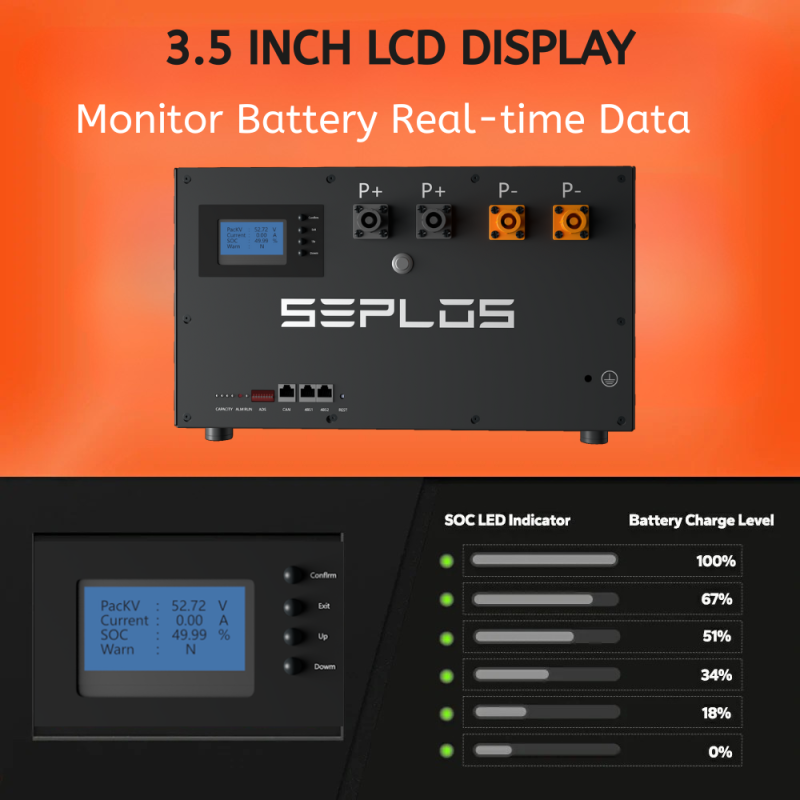
The LCD and LED indicators provide local access to state of charge, operating state and alarm information during commissioning and service.
Verified model data
The values below come from the English SEPLOS MASON-280 (3.0Y) battery-pack specification for the 51.2 V / 280 Ah rack enclosure. They must not be replaced with figures from the vertical MASON-280L or the newer 314 Ah model.
| Model family | SEPLOS MASON-280 (3.0Y), original 280 Ah standard revision |
|---|---|
| Battery type | Complete low-voltage LiFePO4 battery pack |
| Cell arrangement | 16 prismatic 3.2 V / 280 Ah cells in series, nominal 51.2 V |
| Nominal energy | 14.336 kWh (manufacturer rounds to 14.3 kWh) |
| Discharge cut-off voltage | 41.6 V |
| Charge voltage | 57.6 V |
| Recommended continuous charge/discharge current | 140 A at 25 ±2 °C |
| Manufacturer-listed maximum charge/discharge current | 200 A at 25 ±2 °C; final system limit may be lower |
| Charge temperature | 0 to 50 °C |
| Discharge temperature | −10 to 50 °C |
| Storage temperature | −20 to 55 °C |
| State-of-charge range | 5–100%; recommended operating range 15–95% |
| Communication | CAN and RS485 |
| Humidity | 10–85% |
| Ingress protection | IP20 — dry indoor installation |
| Dimensions | 750 × 440 × 251 mm |
| Weight | 112 kg ±5 kg |
| Stacking | Maximum four packs in one manufacturer-approved stack |
| Parallel operation | Up to sixteen matching packs according to the manufacturer specification |
| Cycle reference | 6,000 cycles or more to 80% remaining capacity at 25 °C, 0.5C and 100% DOD under the stated test conditions |
BMS and balancing
The BMS supervises overcharge, over-discharge, over-current, high and low temperature and short-circuit conditions. It also records operating data and supports monitoring through the manufacturer’s service software. These functions protect the battery within its designed limits; they do not make undersized conductors, incorrect fusing or unsuitable inverter settings acceptable.
The standard product must not be confused with the separately advertised 10 A active-balancer option. The 3.0Y manufacturer document describes BMS cell balancing and a 2 A automatic balancing board, but the exact installed board and firmware depend on the supplied production revision. They are therefore confirmed on the order record rather than assumed from a family photograph.
Inverter integration
The manufacturer document lists communication profiles associated with GoodWe, Growatt, Victron, Luxpower, Sofar, SMA and other platforms, and also names Deye among supported inverter families. A brand name alone is not a compatibility guarantee: different models can use different CAN or RS485 protocols, firmware and RJ45 pinouts.
Before dispatch, WodaSign™ records the exact inverter model, firmware, number of battery packs, intended operating mode and required communication lead. Charge and discharge limits are then set from the pack count, cable cross-section, DC protection, ambient conditions and the most restrictive component in the system.
Installation and safety
The cabinet is intended for a dry, ventilated technical space. IP20 does not protect against water ingress, so the pack is not an outdoor battery and must not be placed where condensation, dripping water, direct sunlight, corrosive chemicals or flammable vapours can reach it. Provide a stable non-combustible base, sufficient floor load capacity, service access and mechanical protection for terminals and cables.
Use appropriate lifting and handling equipment; do not drop, crush or puncture the enclosure. Installation, earthing, DC isolation, over-current protection, conductor sizing and commissioning belong to a qualified electrical professional. The battery must never be connected directly to PV strings. A damaged, deformed or persistently faulting pack must be isolated safely and assessed before further use.
For parallel systems, use matching battery revisions and firmware, equal cable paths and the state-of-charge preparation required by the manufacturer. The documented maximum of four packs per physical stack is different from the electrical limit of up to sixteen packs in parallel. Both the mechanical structure and electrical bus must be engineered for the actual site.
Ordering
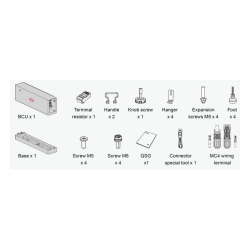
The exact 280 Ah standard revision is supplied on manufacturer confirmation. Before fulfilment, WodaSign™ records the cell batch, BMS, balancing board, accessories, transport route and delivery date in the order. A newer 314 Ah / approximately 16 kWh MASON-280-N is treated as a separate product and is never substituted without the customer’s approval.
The displayed price covers the battery product described on this page. Inverter, external DC and communication cables, external protection, rack or base structure, transport services, installation and commissioning are included only when they appear explicitly in the order. This makes the commercial comparison clear and prevents a bare battery from being mistaken for a complete installed photovoltaic storage system.
Explore solar batteries and battery storage or compare the other products on the SEPLOS battery page.
Technical documentation
The document applies to the original 51.2 V / 280 Ah rack product. Supplier and marketplace research links are retained privately and are not published on the product page.

Use more of your own solar energy and build a dependable reserve for evening consumption and a properly designed backup system.
Key features: 14.3 kWh · LiFePO4 technology. SEPLOS MASON-280 Standard 14.3 kWh – rack LiFePO4 solar battery. A strong choice for new installations and carefully planned expansion. We can verify voltage, communication protocol and the exact inverter model before ordering.