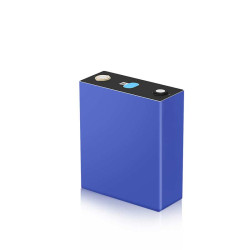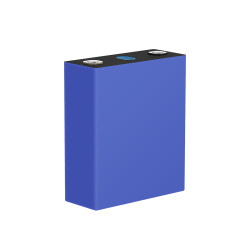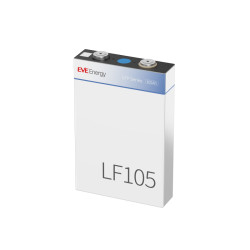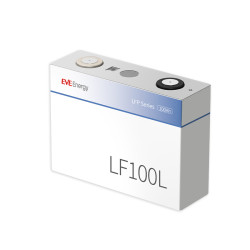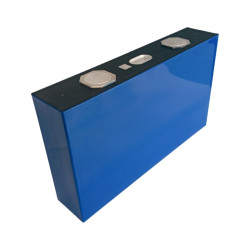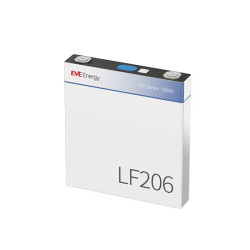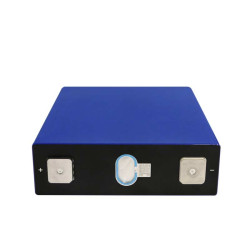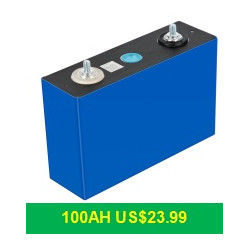
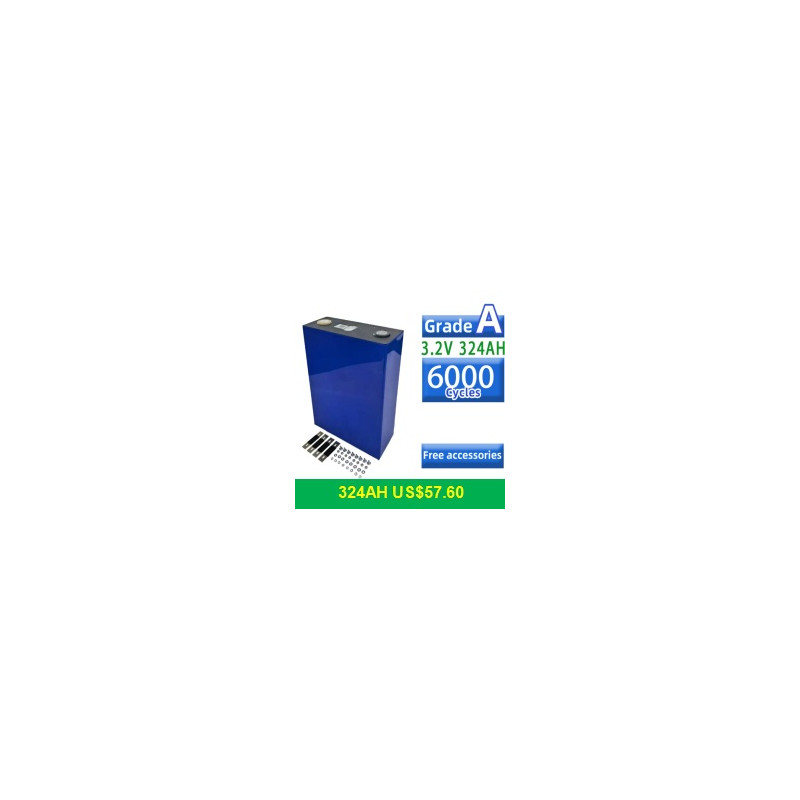

This individual LiFePO4 cell combines 324 Ah capacity with a nominal voltage of 3.2 V. It is a building block for professionally designed battery assemblies and for service work that requires a cell with matching electrical characteristics. Its practical benefit is the ability to choose cell capacity around a specific project, then combine it with appropriate battery management, interconnections and protection.
The 324 Ah capacity represents 1,036.8 Wh nominal energy per cell. It adds 44 Ah relative to a 280 Ah cell, approximately 15.7% more nominal energy at the same voltage. Sixteen cells give 16.5888 kWh at 51.2 V. This is useful when sizing greater capacity in one series string; the enclosure and protection are designed for the actual cell construction.
Calculated examples using matching cells in one series string: 4S: 12.8 V / 324 Ah / 4.1472 kWh; 8S: 25.6 V / 324 Ah / 8.2944 kWh; 16S: 51.2 V / 324 Ah / 16.5888 kWh. These are nominal values before reserve and conversion losses. The sale unit is one cell; a complete-pack order needs the appropriate cell count and separately selected management and interconnections.
| Parameter | Value |
|---|---|
| Capacity | 324 Ah |
| Nominal voltage | 3.2 V |
| Calculated nominal energy | 1.0368 kWh |
| Chemistry | LiFePO4 |
| Sale unit | one cell |
This individual prismatic cell lets an experienced builder size a battery around the required voltage, capacity and installation space. Applications include a professionally assembled solar-storage pack and servicing a pack that uses matching cells. The electrical design brings together cells, a battery management system and protection. The mechanical design secures the cells and shields their terminals. Selecting these components separately gives the project designer control over the layout and integration of the complete battery.
A series connection adds cell voltages while the amp-hour capacity remains that of one string. Four 3.2 V cells provide 12.8 V nominal, eight provide 25.6 V and sixteen provide 51.2 V. Parallel strings increase capacity at the same voltage and require current-sharing and protection design. Choose the number of cells from the pack diagram. Designations such as 4S, 8S and 16S describe the number of series-connected cells and help identify the appropriate battery management system.
A BMS monitors individual cell voltages and, depending on its design, current and temperature. Select a BMS for LiFePO4 chemistry and the correct series-cell count. Its current rating must match both the permitted cell currents and the intended pack load. An amp-hour rating alone does not specify the maximum discharge current. Plan the main fuse, isolation device, sense wiring and cell-balancing procedure together, using the documentation for the exact components selected for the assembly.
Allow space for the cell dimensions, terminal arrangement, insulation and busbars when designing the enclosure. Interconnections need appropriate conductor size, protected surfaces and the specified terminal torque. Mechanical support follows the construction requirements of the exact cell; any compression arrangement is selected from its model documentation. Covered terminals and clearly marked polarity support a methodical build and later inspection. A well-organized enclosure also makes access to the BMS and service points easier.
For a new pack, choose cells with compatible electrical characteristics and a jointly designed operating range. For a replacement, compare capacity, the condition of the existing cells, dimensions, terminals and BMS requirements. Matching nominal voltage is one part of that assessment. Follow the service procedure for bringing cells to a suitable state of charge before connection, and check voltage and polarity. This helps select a suitable replacement for the actual pack rather than relying on capacity alone.
Nominal cell energy is voltage multiplied by amp-hour capacity. Pack energy is the sum for its installed cells; energy reaching the loads then depends on the BMS settings, operating reserve, temperature and conversion efficiency. For solar storage, assess battery capacity separately from inverter output power. Operation at the required load must remain within all relevant current limits. The calculations below compare pack sizes and are planning examples, rather than measurements of a finished assembly.
Record required daily energy, typical and maximum loads, and the available installation space. For a fixed battery, add the exact inverter model; for cells, add the pack diagram and BMS; for a mobile source, list the equipment to be powered. This makes selection of capacity, format, cabling and protection more practical. Choose the exact item and quantity. Availability and dispatch timing are confirmed for the specific order. Tomorrow Systems® s.r.o. is the seller.
At delivery and assembly, compare the exact variant with the project and its instructions. Check physical condition, terminals, polarity and charging settings. Use initial operation to assess actual demand, charging and the configured reserve. A fixed electrical installation should be commissioned by a qualified professional. Periodic checks of connections, operating environment and access to protection devices keep the installation organized throughout its use.
At Wodasign™, compare voltage class, capacity and physical format to choose the item for your battery or portable-energy project.
Estimated delivery from China: 29–59 days.
This individual LiFePO4 cell combines 324 Ah capacity with a nominal voltage of 3.2 V. It is a building block for professionally designed battery assemblies and for service work that requires a cell with matching electrical characteristics.
Estimated delivery from China: 29–59 days.